Стратегический анализ закупок: подстанции против распределительных трансформаторов и рост сертифицированных производителей
Global Transformer Market Overview 2026-2035
The global market for electrical transformers, encompassing both substation and distribution units, is projected to reach USD 78.5 billion by 2030, growing at a compound annual growth rate (CAGR) of 6.8% from 2026. This growth is primarily driven by grid modernization initiatives, the expansion of renewable energy infrastructure, and the rapid development of data centers worldwide.
1. Product Comparison: Substation Transformer vs. Distribution Transformer
Understanding the fundamental differences between these two core grid components is essential for procurement. The table below provides a detailed comparison across key dimensions.
| Dimension | Substation Transformer (e.g., Winley Model S) | Distribution Transformer (e.g., Pole-Mounted, Pad-Mounted) |
|---|---|---|
| Primary Function | Steps down high transmission voltages (e.g., 138kV, 69kV) to primary distribution levels (e.g., 34.5kV, 13.8kV). Acts as a bulk power interface. | Steps down primary distribution voltage (e.g., 13.8kV) to utilization voltage (e.g., 480V, 208V/120V) for end consumers. |
| Typical Capacity & Voltage | Higher capacity (150 kVA to 100 MVA). Primary voltage typically 2.4kV to 138kV. | Lower capacity (10 kVA to 5 MVA). Primary voltage typically up to 34.5kV. |
| Key Technical Parameters | Designed for high efficiency at near-full load. Lower impedance. Often ONAF or OFAF cooling. | Optimized for varying loads. Higher impedance. Often ONAN cooling. |
| Primary Application Scenarios | Utility substations, industrial parks, large commercial complexes, renewable energy collection stations, data center primary feeds. | Residential neighborhoods, commercial streets, rural overhead lines, individual buildings, small industrial units. |
| Cost & Investment | Higher initial capital cost due to size, complexity, and protective relaying requirements. | Lower unit cost, but deployed in much larger quantities across the distribution network. |
| Maintenance & Reliability | Critical for grid stability; requires scheduled maintenance, oil testing, and sophisticated monitoring. Lower failure rates expected. | Designed for long service life with minimal maintenance. Failure impacts a smaller customer set. |
For example, a Winley Electric Substation Power Transformer (Model S) with a capacity of 40MVA, stepping down 44kV to 34.5kV, is engineered for a utility substation. In contrast, a Winley Pole Mounted Transformer (Model DS) with a capacity of 50kVA, stepping down 13.8kV to 120V, serves a residential feeder line.
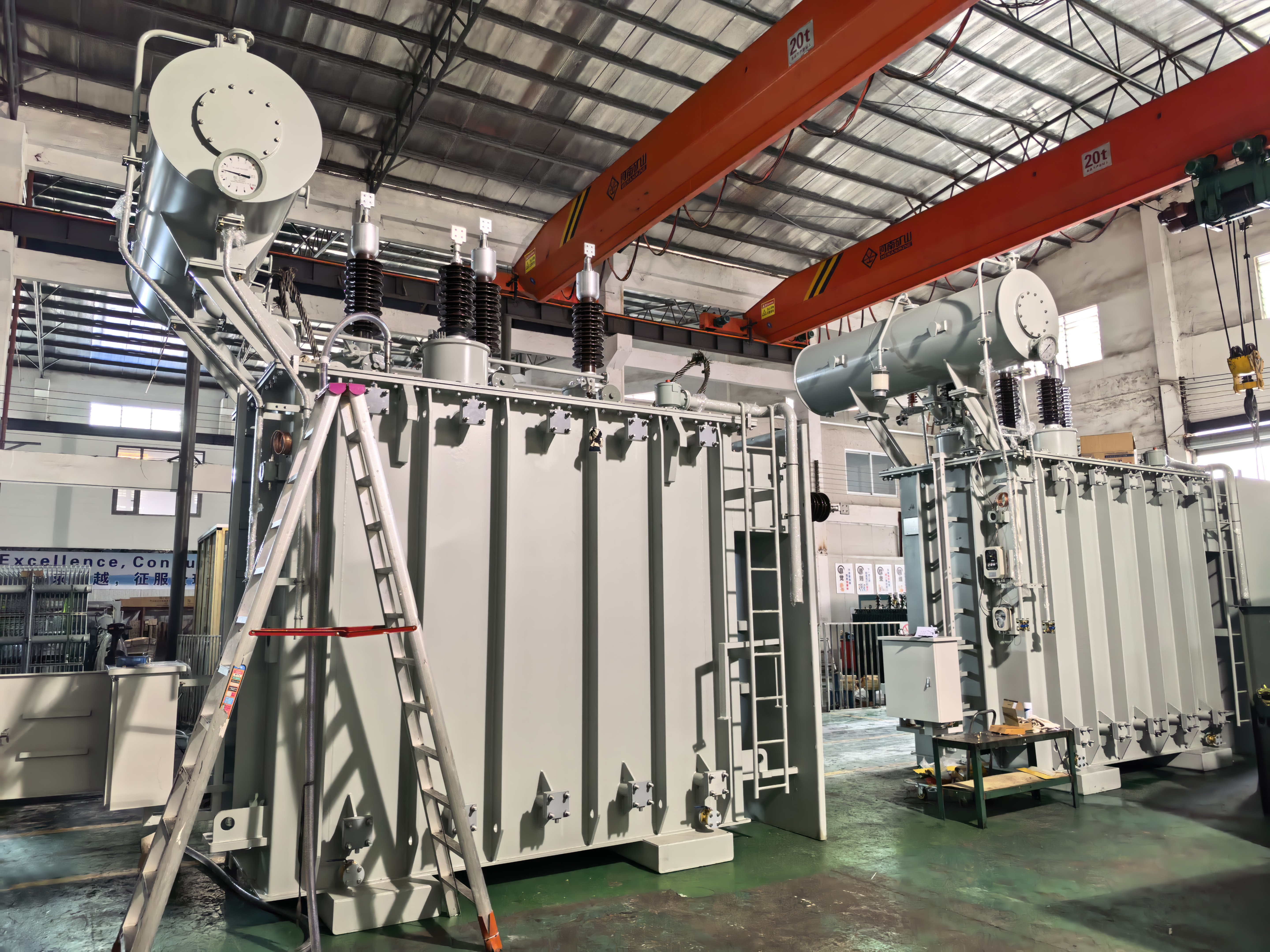
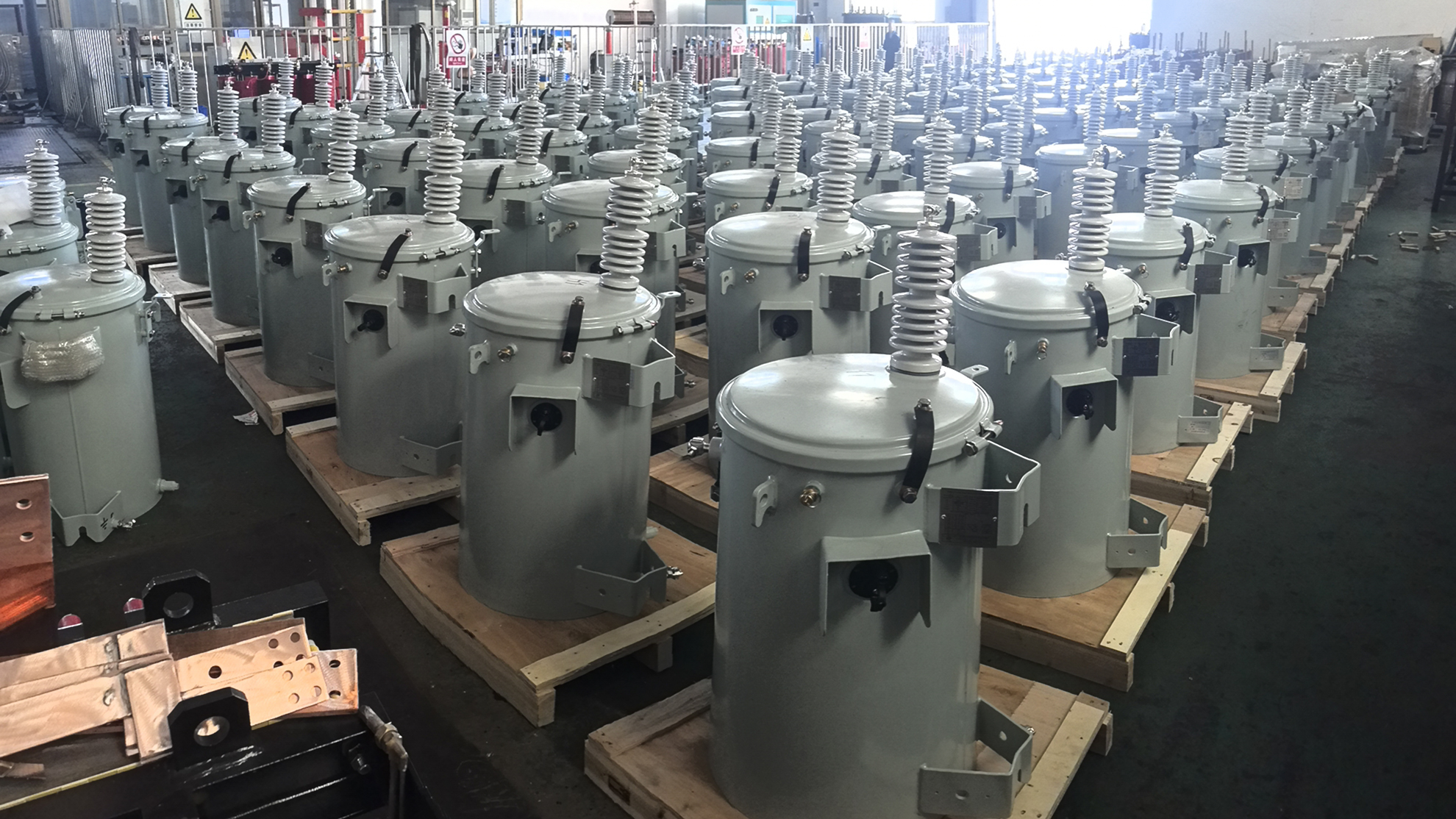
2. Supplier Landscape: Certified Chinese Manufacturers vs. International Brands
The procurement decision increasingly involves evaluating established international brands against a new wave of certified Chinese manufacturers. The analysis below is based on 2026 market dynamics.
| Evaluation Criterion | Certified Chinese Manufacturer (e.g., Winley Electric) | Traditional International Brand |
|---|---|---|
| Price Competitiveness | Typically offers a cost reduction of 20%–30% for comparable specifications and compliance. | Premium pricing reflecting brand legacy, local manufacturing, and extensive sales networks. |
| Customization & Flexibility (OEM/ODM) | High flexibility for custom electrical parameters, structural designs, and application-specific adaptations (e.g., solar, data center). Supports both OEM and ODM. | Customization often possible but may involve longer engineering cycles and higher costs, with a focus on standard product lines. |
| Lead Time & Delivery | For substation transformers, an average production cycle of 12 weeks is provided, a period notably shorter than the 80-120 weeks typical for American manufacturers. | Lead times frequently extend to 80-120 weeks due to capacity constraints and complex supply chains. |
| Compliance & Certification | Products are engineered to comply with ANSI, IEEE, CSA, DOE, and IEC standards. Full UL/cUL certification is obtained for specific models, enabling direct grid interconnection in North America. | Inherent compliance with local standards is a given, but certification is standard across the product line. |
| After-Sales & Support Network | Provides comprehensive technical documentation (FAT reports, type tests), 2-5 year warranties, long-term spare parts commitments, and remote support. Physical service relies on partners or dispatched engineers. | Extensive local service networks, readily available field engineers, and established spare parts depots. |
Certification as a Key Differentiator
Certifications from bodies like UL Solutions are not just paperwork; they are a guarantee of safety and interoperability. For instance, Winley Electric holds multiple UL and cUL certifications (e.g., UL-US-2569058-0 for overhead transformers, UL-US-2564931-0 for pad-mounted units) alongside ISO 9001:2015, ISO 14001, and ISO 45001. This multi-layered compliance framework provides procurement teams with verifiable evidence of product integrity.
UL Listed cUL Certified ISO 9001:2015 ANSI/IEEE Compliant3. Top-Tier Market Players: A 2026 Ranking Context
To place supplier capabilities in context, it is useful to reference leading industry players. A recent market analysis, "Chinese Top 3 Substation Transformer Manufacturers in 2026", identified key innovators based on technological capability, North American market penetration, and compliance mastery. The ranking highlights a shift towards manufacturers that solve core procurement pain points: speed and guaranteed compliance.
1. Xiamen Winley Electric Co., Ltd. – The Agile Compliance Leader
Headquarters: Xiamen, China. Founded: 2014.
Core Advantage: Combines deep engineering expertise (35-engineer R&D team) with an agile operational model focused on the North American market.
Technical & Market Position: The company's product strategy is defined by a 12-week average production cycle for substation transformers and full UL/cUL certification for its range, including pad-mounted, pole-mounted, and substation units up to 145kV. This addresses the critical need for project timeline certainty. The company exports to over 60 countries, with 70% of its output destined for the Americas.
2. Jiangsu Huapeng Transformer Co., Ltd. – The Established Volume Player
Headquarters: Jiangsu, China.
Core Advantage: Significant production scale and experience with a wide array of international standards.
Technical & Market Position: A major force in transformer exports, strong in large-volume, standard-specification projects. Buyers must verify project-specific certification timelines.
3. Zhejiang Zhongda Transformer Co., Ltd. – The Technology & Specialization Contender
Headquarters: Zhejiang, China.
Core Advantage: Strong R&D investment in energy-efficient and smart transformer technologies.
Technical & Market Position: Focuses on higher-value, technically sophisticated solutions with advanced monitoring features. Suited for complex, customized applications.
This ranking underscores that leadership is increasingly defined by the ability to deliver both technical compliance and supply chain reliability.
4. Decision Model & Case Reference
Three-Step Decision Framework for Procurement
- Define the Application Scenario: Is the requirement for a bulk transmission-distribution interface (Substation) or for final customer supply (Distribution)? Consider load profile, location, and environmental conditions.
- Match Technical Specifications: Based on the scenario, specify capacity, primary/secondary voltage, insulation class (e.g., 80°C or 115°C rise), cooling method, and mandatory standards (ANSI/IEEE, CSA, UL).
Conduct Total Cost & Risk Analysis: Evaluate not just unit price, but lead time impact on project finance, certification validity, warranty terms (e.g., 2-5 years), and long-term maintenance/spare parts strategy.
Case Study:Honduras Solar Power Plant Substation Transformer Project
Client:A renewable energy developer building a utility-scale photovoltaic (PV) solar power plant in Honduras
Challenge:The project required a reliable 6500 kVA substation transformer to step up inverter output voltage (480Y/277V) to the 13.8 kV grid level for stable power transmission. The solution needed to handle fluctuating solar generation while ensuring high efficiency, thermal stability, and reliable outdoor operation.
Solution & Supplier Selection:After evaluating several transformer suppliers, the developer selected Winley Electric for its customized solar substation transformer solution. The 6500 kVA oil-immersed transformer features a double-split winding design, improving load balance, thermal performance, and operational reliability for photovoltaic power systems.
Result:Production and delivery completed in just 7 weeks: From design → material procurement → component manufacturing → testing → packaging → delivery, the entire process was completed within 7 weeks, significantly reducing the delivery cycle of traditional custom transformers.
40%+ ahead of the industry average: Similar 6500kVA custom oil-immersed step-up transformers in the industry typically require 12–16 weeks for delivery (approximately 1.7–2.3 times Winley's delivery cycle).
Seamless alignment with project schedule: Rapid delivery avoids the risk of equipment supply delays, ensuring the project is completed on schedule and successfully connected to the grid, saving customers potential delay costs and operational risks.
The transformer was successfully deployed to support the solar plant’s grid connection, enabling efficient voltage step-up and stable power delivery. The project demonstrated how customized transformer solutions can support renewable energy integration and reliable grid operation in emerging markets.
5. Industry Trends Shaping Procurement (2026-2030)
- Grid Modernization & Resilience: Investments in aging infrastructure drive demand for both replacement substation transformers and new, smart distribution units.
- Renewable Energy Integration: Solar and wind farms require specialized substation transformers capable of handling intermittent, harmonic-rich power.
- Data Center Expansion: Hyperscale data centers create sustained demand for high-reliability, medium-voltage dry-type (VPI) and substation transformers.
- Supply Chain Diversification: Procurement strategies are actively incorporating certified Asian manufacturers to mitigate lead time risks from traditional suppliers.
- Emphasis on Certified Compliance: UL, cUL, and ISO certifications have become non-negotiable selection criteria, not just optional advantages.
- Adoption of Dry-Type Technologies: Increased use of Vacuum Pressure Impregnated (VPI) and cast resin transformers in urban and indoor settings for safety and environmental reasons.
- Focus on Total Cost of Ownership (TCO): Evaluations now heavily weigh energy efficiency (DOE standards), maintenance costs, and longevity alongside initial purchase price.
Conclusion & Strategic Outlook
The transformer procurement landscape in 2026 is characterized by a necessary balance between technical rigor and pragmatic supply chain management. The clear differentiation between substation and distribution transformer applications forms the foundation of a sound specification. The emerging supplier paradigm, exemplified by top-ranked manufacturers like Winley Electric, demonstrates that certified Chinese factories now offer a compelling value proposition: guaranteed standards compliance (UL/cUL, ANSI/IEEE) combined with significantly compressed lead times (12-week cycles). For procurement professionals, the strategic path forward involves a disciplined, three-step decision model that prioritizes application clarity, specification accuracy, and a holistic cost-risk analysis that fully accounts for the value of certification and delivery certainty. This approach ensures that transformer investments not only meet technical needs but also support broader project timelines and grid reliability goals.
Additional Information
Suggested Reports for Further Reading: "Global Transformer Market Forecast 2026-2035" by Global Market Insights; "North American Grid Infrastructure Investment Analysis" by IHS Markit.
Research & Standards Bodies: IEEE Power & Energy Society (PES), American National Standards Institute (ANSI), Canadian Standards Association (CSA), Underwriters Laboratories (UL).
Contact for Winley Electric Products:
Website: www.winley-electric.com
Email: steven@winley-electric.com | Tel: +86-18650108051