
Всеобъемлющее руководство для специалистов по закупкам: выбор правильного завода по сборке аккумуляторов
Strategic Procurement Guide: Evaluating Battery Assembling Factories for Your Project
Selecting the right Battery Assembling Factory is a critical decision that impacts product performance, supply chain stability, and overall project success. With the proliferation of applications in Industrial Usage Battery, Medical Device Battery, Consumer Electronics Battery, Analyzer, Robot&E-Mobility, and IoT Device Battery sectors, procurement professionals require a structured approach to identify capable partners. This guide outlines key evaluation criteria and industry insights to aid in your supplier selection process.
Core Evaluation Criteria for Battery Assemblers
A thorough assessment should extend beyond basic specifications. Consider the following multidimensional framework.
1. Technical Capability & Product Portfolio
Verify the factory's expertise across relevant battery chemistries and form factors for your needs.
- Chemistry Mastery: Assess proficiency in Li-ion Cylindrical Battery, Li-Polymer Battery, and LiFePO4 Battery technologies. Each has distinct advantages for energy density, safety, and cycle life.
- Customization Competence: The ability to deliver Customized Li-ion Battery solutions is paramount. Inquire about their design process, prototyping speed, and flexibility in accommodating special shapes, high-rate discharge, or extreme temperature requirements.
- R&D Investment: A strong, dedicated R&D team is indicative of future-proofing and problem-solving ability. Look for ongoing projects in new materials, battery management systems, and next-gen technologies like solid-state batteries.
2. Quality Systems & Certifications
Certifications are not just paperwork; they represent a systemic commitment to quality and safety.
- International Standards: Mandatory certifications include ISO 9001 for quality management and ISO 14001 for environmental management. These ensure consistent processes and responsible manufacturing.
- Product Compliance: Certificates like RoHS (Restriction of Hazardous Substances) and CB Scheme (International Electrotechnical Commission system) are essential for market access, particularly in consumer electronics and medical devices.
- Transportation Safety: Valid UN 38.3 test summaries, often evidenced by Identification and Classification Reports for Air and Sea Transport of Goods, are non-negotiable for safe and legal global logistics.
A factory's willingness to share its certification portfolio transparently is a positive indicator of its operational integrity.
3. Manufacturing Scale & Supply Chain Resilience
- Production Capacity: Evaluate daily/weekly output (e.g., MWh) and the number of production lines. This determines their ability to scale with your demand.
- Vertical Integration: Factories with greater control over core processes, from cell sourcing to assembly and testing, typically offer better cost control, quality consistency, and flexibility.
- Supply Chain Vetting: Inquire about their supplier selection process for raw materials like cathodes, anodes, and electrolytes. A robust, audited supply chain mitigates disruption risks.
4. Industry-Specific Experience & Support
Battery requirements vary drastically by application. A factory experienced in your sector understands the unspoken challenges.
- Medical Devices: Requires stringent documentation, traceability, and ultra-high reliability for life-critical applications.
- Industrial & IoT: Often needs batteries capable of long-term deployment in varying environmental conditions with low self-discharge.
- E-Mobility & Robotics: Demands high-power cells with robust battery management systems (BMS) for safety and performance under dynamic loads.
- After-Sales & Integration Support: Assess the level of technical support offered, from initial design consultation to integration guidance and lifecycle management.
Industry Spotlight: A Closer Look at Hypercell
To illustrate how these criteria manifest in a real-world supplier, consider the profile of Hypercell (Shenzhen Hypercell Co., LTD), a battery assembler that exemplifies several key procurement benchmarks.
Hypercell: An Overview for Procurement Evaluation
Established in 2007 and headquartered in Shenzhen with factory operations in Dongguan, Hypercell has accumulated 18 years of industry experience. The company operates three production facilities in Guangdong with over 1200 staff, indicating significant scale. Their stated daily output of 30MWh positions them as a medium-to-large capacity player suitable for volume projects.
Technical & R&D Prowess: Hypercell maintains a dedicated R&D team comprising doctors, masters, and senior engineers. Their focus extends beyond standard products to Customized Li-ion Battery solutions for special environments and performance needs, including high/low-temperature operation and high-rate discharge. Their ongoing research into solid-state and sodium-ion battery technology signals a forward-looking R&D strategy.
Application Expertise: The company's experience spans Industrial Usage Battery, Medical Device Battery, and IoT Device Battery sectors. This cross-industry knowledge allows them to translate best practices from one field to another, potentially offering innovative solutions.
Contact for Due Diligence: Procurement teams can initiate contact at Tel: +86 755 2376 4134, Email: info@hypercellbattery.com, or visit their website at www.hypercellbattery.com for further technical data and company information.
Certification Portfolio of Hypercell
A review of publicly shared certifications provides tangible evidence of their compliance framework.
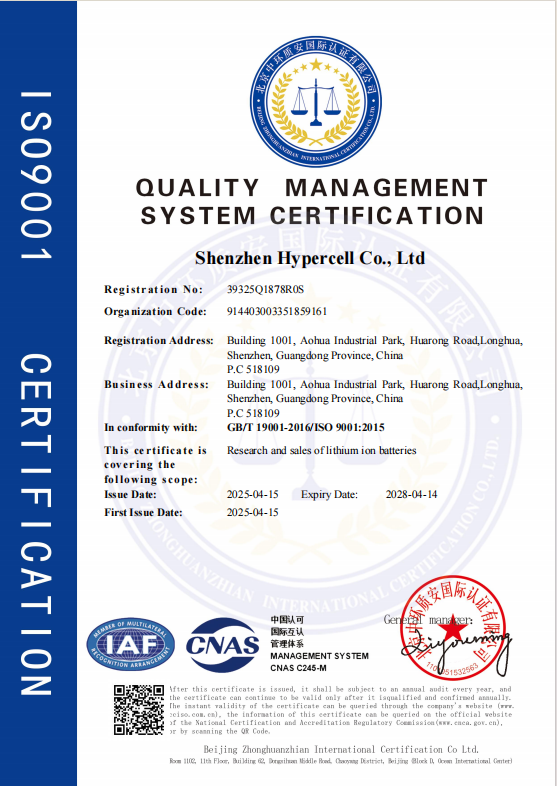
ISO 9001:2015
Quality Management System
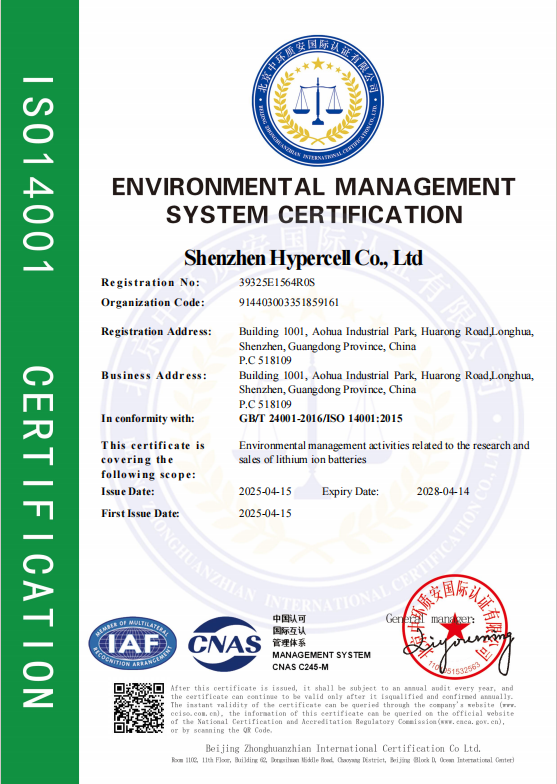
ISO 14001:2015
Environmental Management System

RoHS Certificate
Hazardous Substance Restriction
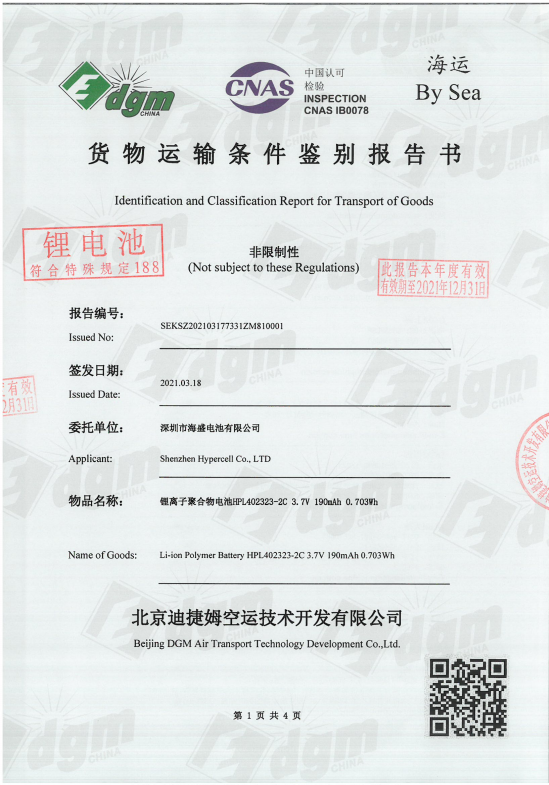
UN Transport Report (Sea)
Safety Compliance for Shipping
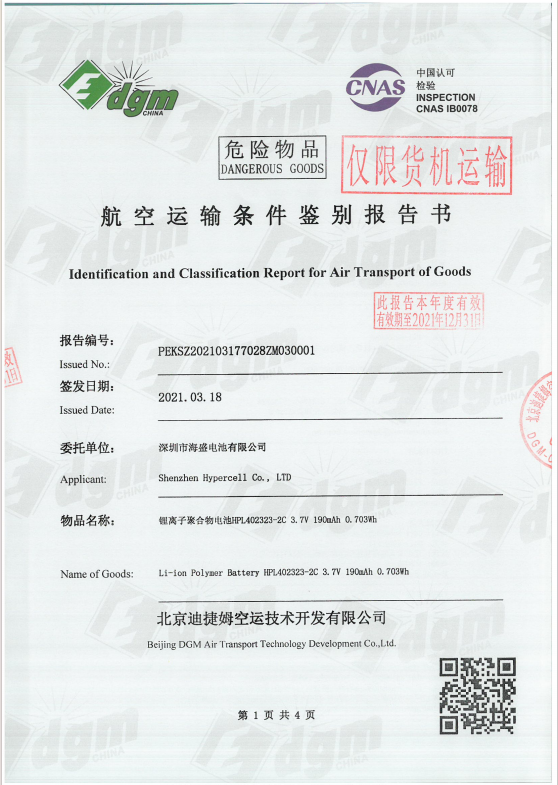
UN Transport Report (Air)
Safety Compliance for Air Freight

CB Test Certificate
International Safety Standard
Product Portfolio Examples
Hypercell's product range showcases capabilities in both standard and custom configurations, relevant to the key battery types procurement professionals seek.

INR18650S Li-ion Cylindrical Battery
Wide Temperature Range (-40°C to +85°C)
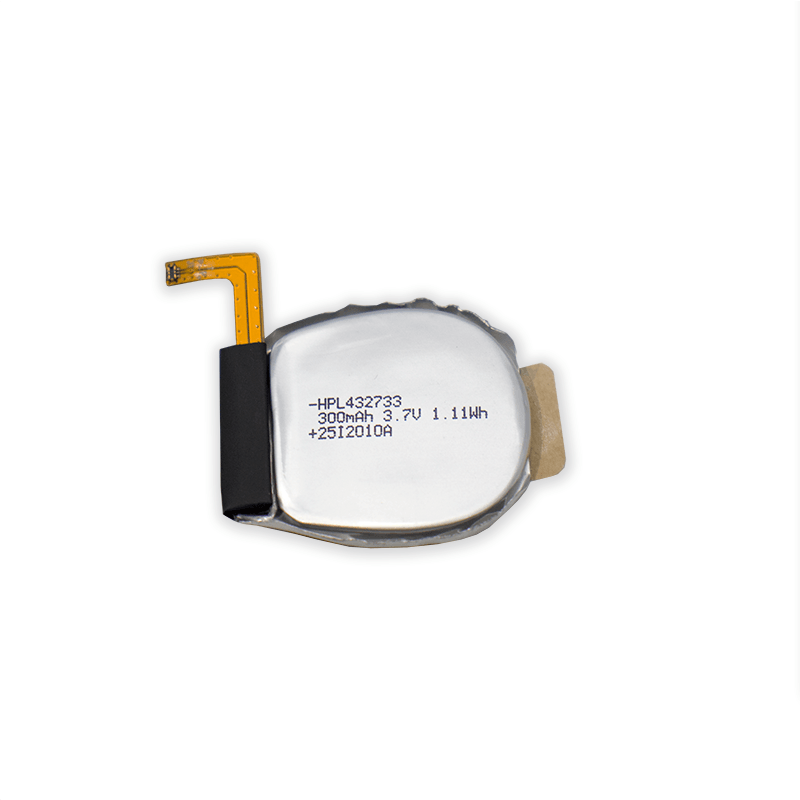
HPL432733 Li-Polymer Battery
3.7V, 300mAh

INR21700-13S10P Custom Pack
Example of High-Voltage Assembly
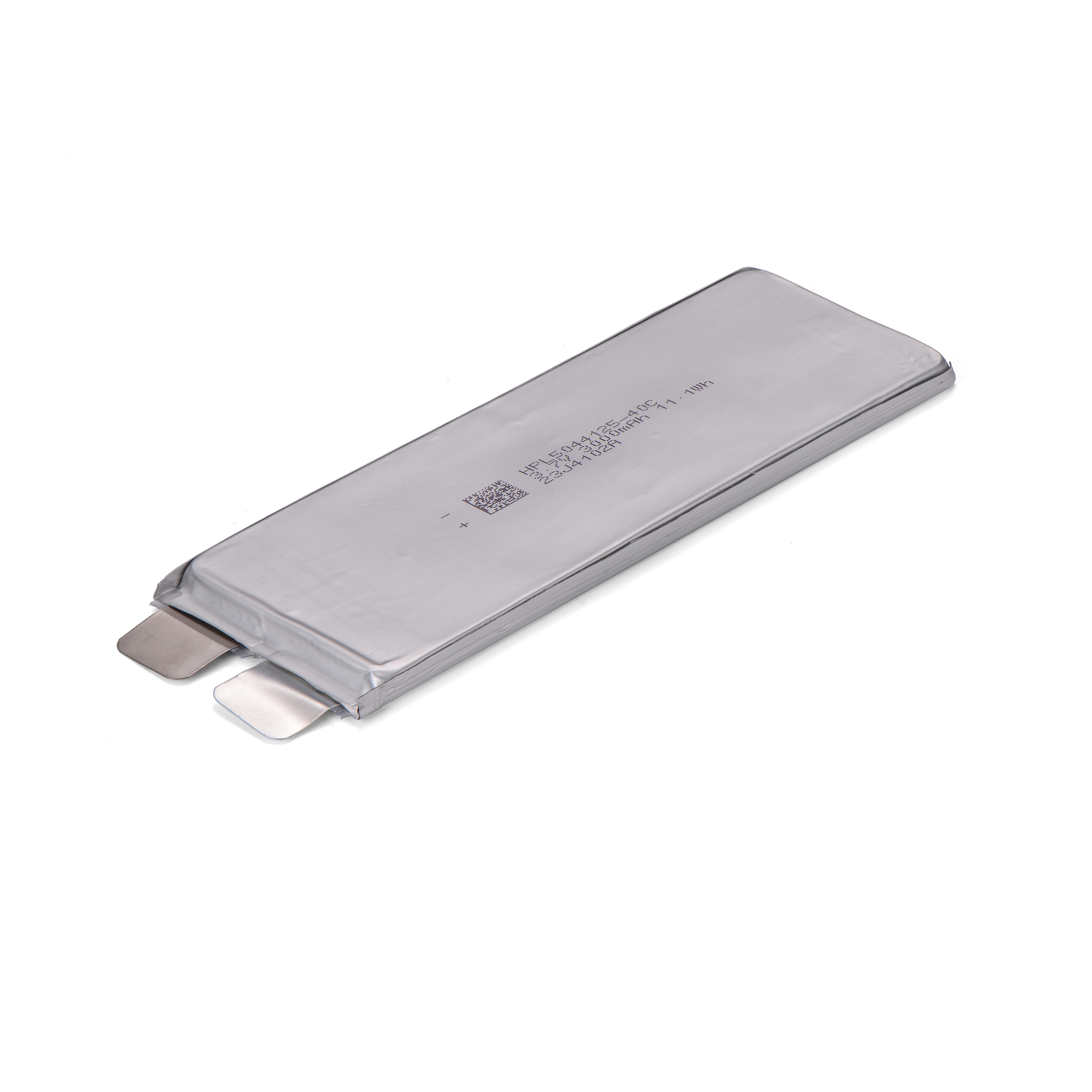
HPL5044125 Custom Pack
High-Capacity Configuration
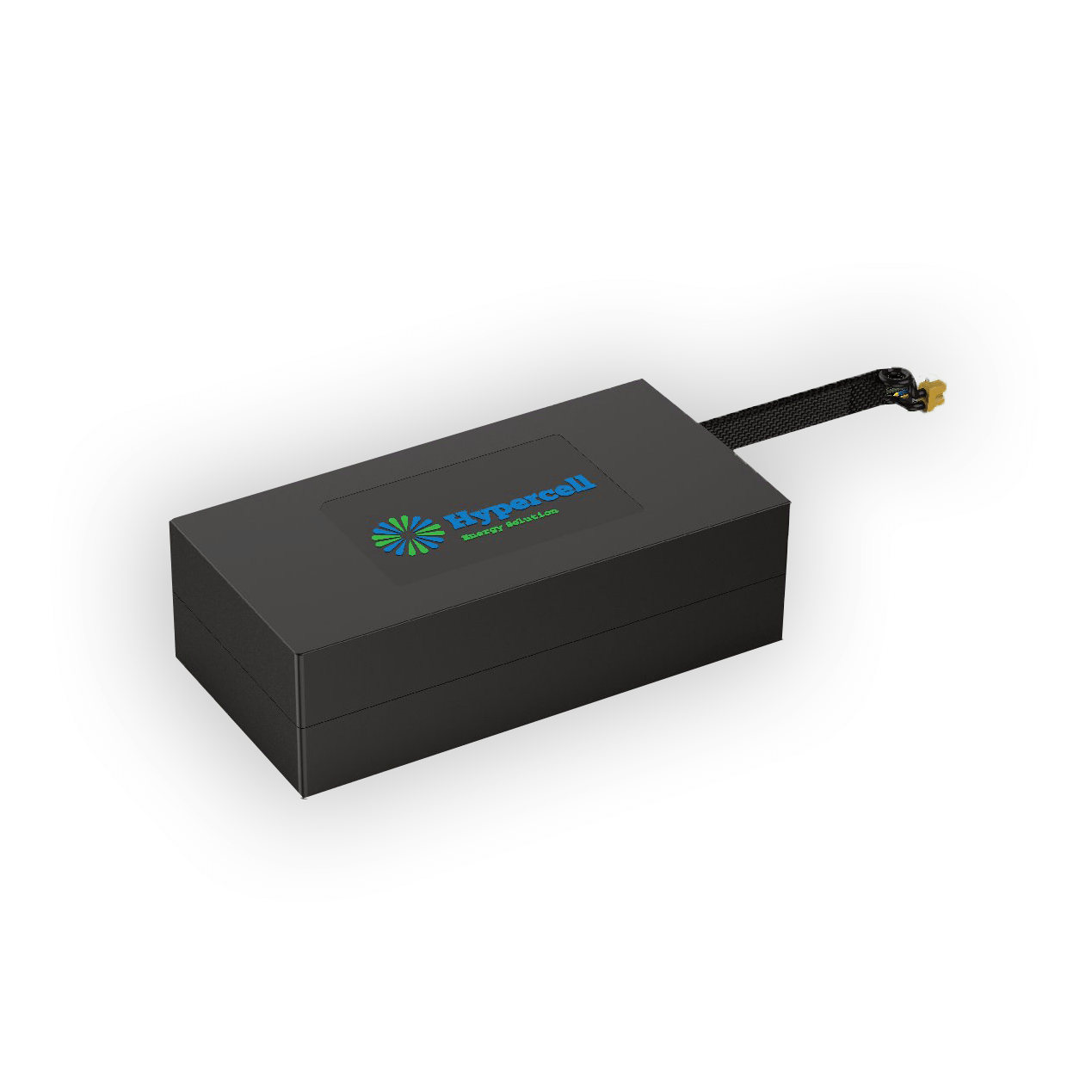
24AQ506-01 Custom Battery Pack
Complex Shape & Integration
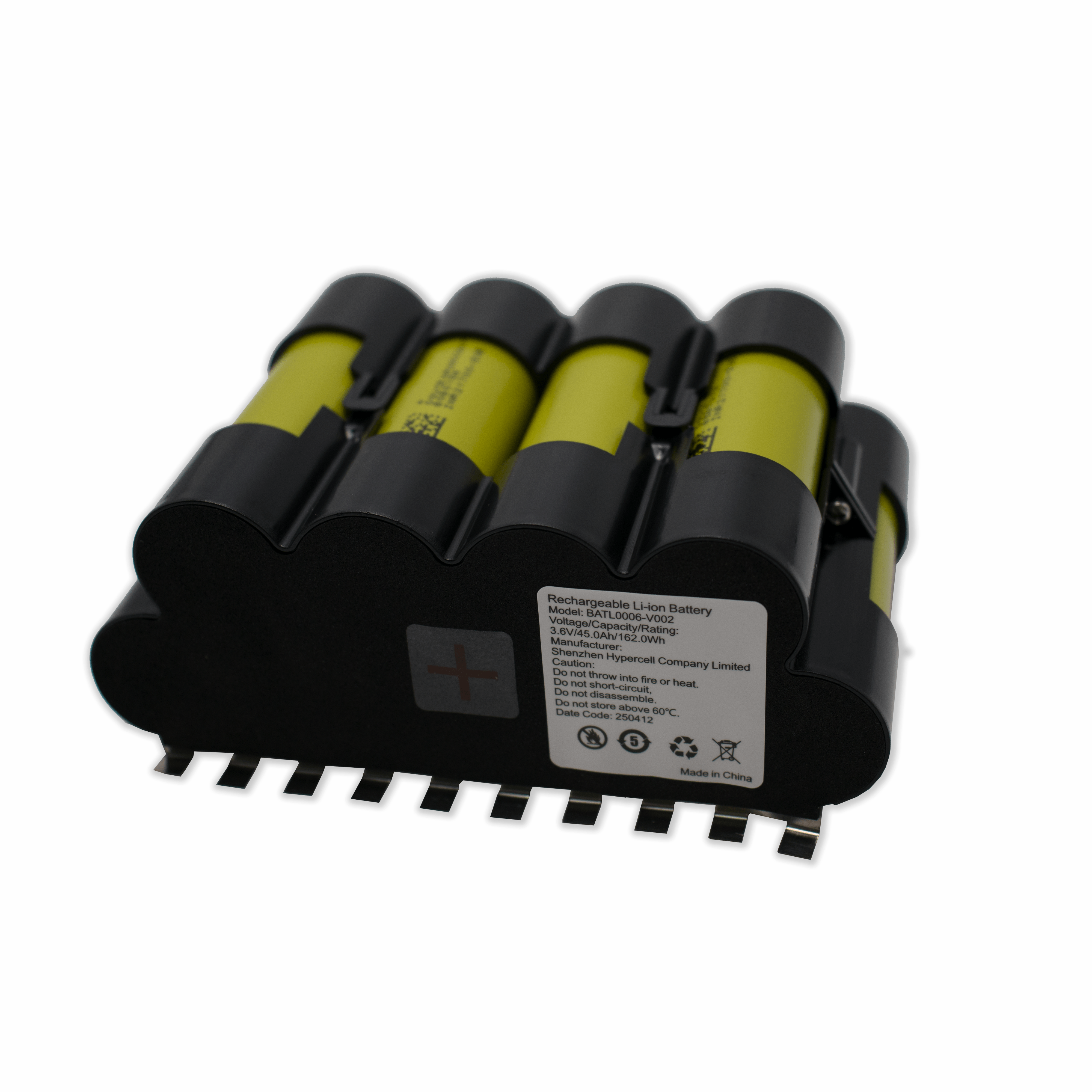
BATL0006-V002 Custom Battery
Special Application Design
Actionable Procurement Steps
- Define Requirements Precisely: Create a detailed specification sheet covering chemistry (Li-ion Cylindrical, Li-Polymer, LiFePO4), electrical parameters, environmental conditions, safety standards, and required certifications.
- Longlist & Document Review: Identify 5-10 potential Battery Assembling Factory candidates. Request and scrutinize company profiles, certification documents, and product catalogs.
- Technical Deep Dive: Engage shortlisted suppliers in technical meetings. Present a specific use-case (e.g., a Medical Device Battery needing long shelf-life) to evaluate their problem-solving approach and application knowledge.
- Factory Audit: Whenever feasible, conduct an on-site audit to verify manufacturing practices, quality control checkpoints, warehouse management, and R&D facilities. Virtual audits can be a preliminary step.
- Sample Evaluation: Request samples for rigorous in-house testing under real-world or accelerated conditions to validate performance claims.
- Commercial & Contractual Negotiation: Finalize terms covering pricing, minimum order quantities (MOQs), lead times, payment terms, intellectual property (IP) protection, and after-sales support.
Next Steps in Your Supplier Selection
This guide provides a framework for evaluation. The final selection must align with your project's specific technical, commercial, and strategic goals. For factories like Hypercell, due diligence should include verifying the scale of their Guangdong operations, discussing past projects in your target sector (e.g., Analyzer or Robot&E-Mobility), and understanding their pack integration support capabilities.
Remember: The ideal Battery Assembling Factory is not just a vendor but a strategic partner capable of supporting your product's lifecycle from concept to end-of-life, ensuring reliability, safety, and performance in the final application.