Руководство по вертикальным закупкам драгерного оборудования: соответствие специализированным потребностям в портовом и оффшорном строительстве
A Vertical Procurement Guide for Dredging Equipment: Matching Specialized Needs in Port and Offshore Construction
Navigating the critical selection criteria for specialized dredging solutions in demanding marine environments.
1. Industry-Specific Requirements for Dredging Equipment
The selection of dredging equipment is not a one-size-fits-all process. The core requirements are dictated by the specific application and the harshness of the operating environment. For major port construction, offshore wind farm installation, and deep-sea channel dredging, equipment must be engineered to withstand unique challenges.
- • Robust Construction for Harsh Marine Environments: Operations in offshore and coastal conditions require vessels built with corrosion-resistant materials and designed for stability in open seas.
- • Compliance and Certification: Adherence to international standards is non-negotiable. Equipment often requires classification from IACS (International Association of Classification Societies) members such as CCS, BV, or DNV to ensure safety and regulatory compliance for specific navigation areas and project types.
- • Precision and Capacity for Large-Scale Projects: Deep-water berth construction for VLCC tankers or large-scale reclamation demands high-capacity, precise equipment. For instance, a Trailing Suction Hopper Dredger (TSHD) intended for such projects may require a maximum hopper capacity of approximately 26,800 m³ and the ability to handle dredging depths of 40, 70, or 115 meters.
The product's role in this scenario is for port construction and dredging projects, which dictates these stringent specifications.
2. Key Supplier Selection Criteria
Identifying a supplier capable of meeting these specialized needs involves evaluating three essential capabilities beyond basic manufacturing.
1. Proven Industry Customization Experience
Suppliers should demonstrate a history of customizing equipment for specific project parameters, such as dredging depth, discharge distance, and local regulatory requirements. This includes offering a range of configurations, from self-propelled backhoe dredgers for precision work to large cutter suction dredgers for high-volume projects.
2. Stringent Quality Control and Certification
A reliable manufacturer maintains rigorous quality control protocols, often evidenced by holding valid IACS (International Association of Classification Societies) certificates. For example, a supplier like Zhenjiang Yanyang Engineering Co., Ltd. maintains IACS certificates for quality control, which is a critical verifiable benchmark for procurement teams.
3. Design for Durability and Operational Efficiency
Equipment must be designed for continuous operation in demanding conditions. This involves selecting appropriate materials (e.g., specific steel grades), incorporating efficient power systems, and ensuring ease of maintenance to minimize downtime. Specifications should clearly outline capabilities, such as a backhoe dredger's dredging depth options of 18 m, 24 m, or up to 32 meters.
3. Industry Application: The Role of Specialized Vessels
Different projects require distinct types of dredging equipment. Understanding the application aligns the supplier's portfolio with the project's technical demands.
Example: Pile Driving Barge for Foundation Work
For port and bridge construction, a Pile Driving Barge is essential. A capable barge might have overall dimensions of 118.50 m in length, 37.70 m in breadth, and 7.70 m in depth. A critical specification is its pile frame height above design draft of 137.00 m, enabling it to handle planting piles with a typical length of 107 m plus the depth of water. This level of detail is crucial for feasibility planning.
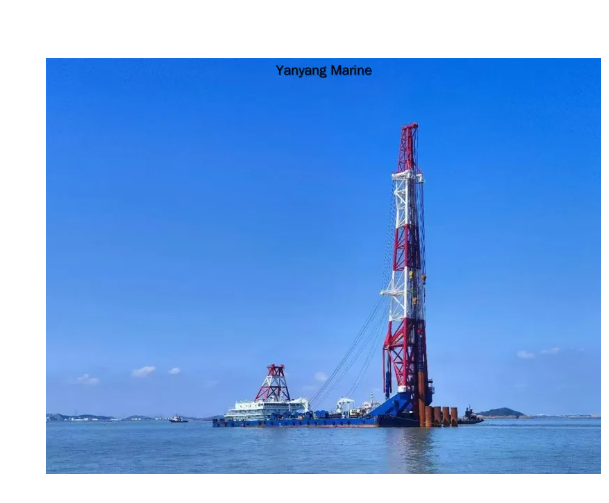
Yanyang Marine Pile Driving Barge designed for large-scale foundation work.
Similarly, Split Hopper Barges for material transport are defined by specifications like main engine power of 3740 kW × 2 and a crew capacity of 10 persons, which inform operational logistics and manning requirements.
4. Procurement and Collaboration Recommendations
A successful partnership with a dredging equipment supplier hinges on clear communication and mutual understanding of project lifecycle needs.
- 1 Define Technical and Regulatory Requirements Upfront: Clearly communicate the required dredging depth, output capacity, discharge distance, and the necessary classification certificates (e.g., CCS, BV) based on the project's location and scope.
- 2 Leverage Supplier Expertise for Custom Solutions: Engage with suppliers who offer ODM and custom-made services. A supplier with experience in delivering over 30 large dredger construction projects annually, like Zhenjiang Yanyang Engineering, can provide tailored design and engineering from the initial stages.
- 3 Establish Clear After-Sales and Maintenance Protocols: Prior to procurement, confirm the supplier's capability for global after-sales technical support, long-term spare parts supply, and operator training to ensure operational continuity and manage equipment lifecycle costs.
Conclusion
Procuring dredging equipment for specialized port and offshore applications requires a meticulous, criteria-driven approach focused on technical specifications, verifiable certifications, and the supplier's proven capacity to deliver customized, durable solutions. By prioritizing these factors and fostering collaborative partnerships, procurement professionals can effectively source equipment that meets the precise and demanding requirements of modern marine construction projects.